RFID Asset Tagging
Organizations today manage thousands of physical assets across offices, warehouses, hospitals, construction sites, and industrial facilities. These assets include laptops, machinery, medical devices, tools, containers, and critical operational equipment. Yet many organizations still rely on spreadsheets, manual logs, or barcode scanning to keep track of them.
These traditional methods create visibility gaps. Assets go missing. Equipment sits unused while teams purchase duplicates. Audits consume weeks of staff time. Decision makers often lack reliable data about where assets are located and how they are being used.
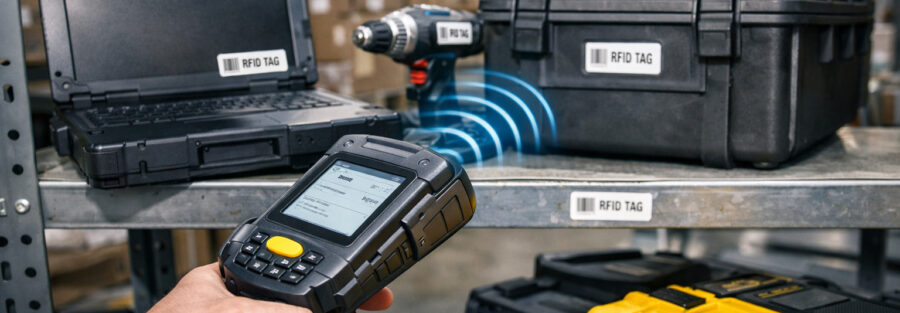
RFID asset tagging solves this problem by allowing organizations to automatically identify and track assets using radio frequency technology. Instead of scanning one item at a time, RFID systems can read multiple assets simultaneously and from a distance. This transforms asset management from a manual process into a real time digital system.
When RFID asset tags are attached to equipment, organizations gain continuous visibility into asset location, movement, and status. This data supports faster audits, better utilization of equipment, and stronger operational control.
Many organizations implementing RFID solutions begin with a structured asset visibility strategy such as an enterprise level RFID asset management platform. More on this page.
This guide explains everything organizations need to understand about RFID asset tagging including how the technology works, how to select RFID asset tags, how systems are deployed, and how leading industries use this technology to improve operations.
What Is RFID Asset Tagging
RFID asset tagging is the process of attaching RFID asset tags to physical equipment so those assets can be automatically identified and tracked using radio frequency signals.
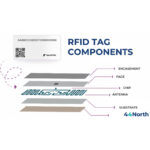
Each RFID tag contains a microchip and antenna. The chip stores a unique identifier that corresponds to a record in an asset management system. When an RFID reader sends a radio signal, the tag responds by transmitting its stored data.
This interaction allows systems to instantly identify assets without manual scanning.
The key advantage of RFID asset tagging is that it eliminates the requirement for line of sight scanning. Multiple tags can be read at once, even if they are inside boxes, on shelves, or moving through facilities.
Typical assets that organizations tag include
IT equipment such as laptops and monitors
Manufacturing tools and spare parts
Medical equipment in hospitals
Warehouse containers and pallets
Construction equipment
Government and enterprise fixed assets
By connecting RFID asset tags to an asset management system, organizations create a digital identity for each physical item. This identity allows software systems to track asset movement, location, and lifecycle history.
How RFID Asset Tagging Works
An RFID asset tagging system consists of three main components.
RFID asset tags
RFID readers
Asset management software
Together these components create an automated system that collects and processes asset data.
RFID Asset Tags
RFID asset tags are small electronic labels that store a unique identifier for an asset. Each tag contains a chip and antenna that communicates with RFID readers.
These tags can be embedded in labels, plastic housings, or rugged enclosures depending on the environment where they will be used.
RFID asset tags are designed for different operating conditions including offices, warehouses, outdoor sites, and industrial facilities.
When selecting RFID asset tags organizations must consider
Material of the asset
Environmental conditions
Required read range
Attachment method
Correct tag selection is essential for reliable performance.
RFID Readers
RFID readers transmit radio signals that activate nearby RFID asset tags. Once activated the tags respond by sending their stored identifier back to the reader.
Readers can be deployed in multiple ways including
Handheld mobile scanners used by staff
Fixed readers installed at doorways
Ceiling mounted readers covering storage areas
Vehicle mounted readers on forklifts
Because RFID readers can capture many tags simultaneously they enable rapid asset audits and inventory checks.
Asset Management Software
The software platform is the system that turns RFID data into operational insight.
When readers capture tag information the data is transmitted to an asset management system that records asset identity, location, and movement history.
Enterprise platforms allow organizations to
Locate assets quickly
Conduct faster asset audits
Track asset movement between locations
Monitor utilization of equipment
Maintain lifecycle records
Many organizations integrate RFID systems with existing enterprise platforms such as ERP systems or asset management tools to maintain a single source of truth for equipment data.
Types of RFID Asset Tags
Selecting the right RFID asset tags is one of the most important design decisions in an RFID deployment. Different environments require different tag types.
Passive RFID Asset Tags
Passive RFID asset tags are the most commonly used tags in asset tracking systems.
These tags do not contain a battery. Instead they draw power from the signal transmitted by an RFID reader.
Advantages of passive RFID asset tags include
Lower cost
Long operational lifespan
Compact size
Minimal maintenance
Passive RFID asset tags are widely used for IT asset tracking, warehouse inventory management, and enterprise asset audits.
Active RFID Asset Tags
Active RFID asset tags contain a battery that continuously broadcasts signals.
Because of this built in power source active tags can be detected over longer distances than passive tags.
These tags are often used in environments where assets move across large areas such as
Mining operations
Construction sites
Logistics yards
Vehicle tracking environments
Active RFID asset tags offer extended range but they require periodic battery replacement and typically involve higher costs.
Rugged RFID Asset Tags
Industrial environments often require specialized RFID asset tags designed to withstand harsh conditions.
Rugged RFID asset tags may be built to tolerate
Extreme temperatures
Heavy vibration
Exposure to chemicals
Outdoor weather conditions
Metal surfaces
These tags are frequently used in manufacturing, oil and gas, mining, and construction environments where durability is essential.
Benefits of RFID Asset Tagging
Organizations adopt RFID asset tagging because it provides measurable improvements in efficiency, visibility, and operational control.
Faster Asset Audits
Traditional asset audits require staff to manually locate and scan each item individually. This process can take days or even weeks in large facilities.
RFID asset tagging allows hundreds of items to be scanned in seconds. Staff can simply walk through an area with a handheld reader and capture all tagged assets automatically.
This dramatically reduces the time required to complete asset audits.
Improved Asset Visibility
One of the biggest challenges organizations face is simply knowing where their assets are located.
RFID asset tags allow organizations to track asset movement across facilities, departments, and project sites.
This visibility enables teams to quickly locate equipment and reduce time spent searching for tools or devices.
Reduced Asset Loss
Misplaced equipment is a common problem in many organizations. Tools disappear between job sites. Equipment moves between departments without records being updated.
RFID asset tagging reduces these risks by providing an automated record of asset movement.
When assets leave designated areas or appear in unexpected locations organizations can detect the change immediately.
Lower Operational Costs
Manual asset tracking requires significant labor time. Staff must perform regular audits, update spreadsheets, and investigate missing equipment.
RFID automation reduces these manual tasks. Employees can capture large volumes of asset data quickly which improves productivity and reduces administrative workload.
Better Asset Utilization
Many organizations purchase new equipment even though similar assets already exist within the organization.
RFID asset tagging provides visibility into asset availability and usage patterns. This allows organizations to redistribute underutilized equipment instead of purchasing duplicates.
Industries Using RFID Asset Tagging
RFID asset tagging has been adopted across many sectors where asset visibility is critical.
Healthcare
Hospitals manage thousands of mobile medical devices including infusion pumps, wheelchairs, monitors, and diagnostic equipment.
RFID asset tags allow healthcare staff to locate equipment quickly which improves patient care and reduces delays.
Manufacturing
Manufacturers use RFID asset tagging to track tools, spare parts, and production equipment across facilities.
Accurate tracking helps maintain production efficiency and prevents costly downtime caused by missing equipment.
Logistics and Warehousing
Warehouses often track pallets, containers, and returnable transport items using RFID asset tags.
This provides improved supply chain visibility and reduces errors during receiving, storage, and shipping processes.
Construction
Construction companies operate across large job sites where tools and machinery frequently move between locations.
Rugged RFID asset tags allow project teams to track equipment usage and reduce loss of valuable tools.
Government and Enterprise
Public sector organizations often manage large inventories of laptops, vehicles, and infrastructure assets.
RFID asset tagging supports compliance with asset auditing requirements and improves accountability across departments.
How to Implement RFID Asset Tagging
Successful RFID asset tagging deployments follow a structured implementation approach.
Identify Assets for Tagging
Organizations begin by identifying which assets should be tagged. These are typically high value equipment, frequently moved items, or assets that require regulatory audits.
Select Appropriate RFID Asset Tags
Choosing the correct RFID asset tags requires evaluating environmental conditions, asset materials, read range requirements, and attachment methods.
Pilot testing is often recommended to validate tag performance before full deployment.
Deploy RFID Readers
Readers are installed in strategic locations across facilities. Common deployment areas include entry points, storage areas, warehouses, and tool rooms.
Handheld readers are also used for mobile asset tracking and inventory audits.
Integrate with Asset Management Systems
RFID data must integrate with asset management platforms so that asset records update automatically when tags are read.
This integration ensures asset visibility across the organization. Learn more about RFID and ERP integrations here.
Train Staff and Align Processes
Technology alone does not guarantee success. Organizations must align operational processes and train employees on how RFID asset tagging supports daily workflows.
Proper training ensures the system delivers consistent and reliable data.
Challenges of RFID Asset Tagging
While RFID asset tagging delivers significant benefits organizations should consider several implementation challenges.
Metal surfaces and liquids can sometimes affect signal performance which requires careful tag selection.
Initial deployment costs can also be higher than barcode systems due to readers, infrastructure, and specialized tags.
However most organizations find that the long term operational savings and efficiency improvements outweigh these initial investments.
The Future of RFID Asset Tagging
RFID technology continues to evolve alongside advancements in IoT and enterprise data platforms.
New RFID asset tags are being developed with sensor capabilities that can monitor temperature, vibration, and equipment conditions.
These capabilities enable organizations to move beyond simple asset tracking toward predictive maintenance and intelligent asset management.
As organizations increasingly focus on operational efficiency and digital transformation, RFID asset tagging is becoming a foundational technology for modern asset visibility strategies.
Enterprises that adopt RFID asset tagging today position themselves to make better operational decisions, reduce asset loss, and gain real time insight into the physical resources that power their operations.