A Technical Overview and Evolution
Radio Frequency Identification (RFID) labels are adhesive-backed tags embedded with small RFID inlays that enable wireless identification and data exchange. Unlike barcodes, RFID labels can be scanned without line-of-sight and in bulk, drastically improving speed and accuracy in tracking assets and inventory.
The Core Components
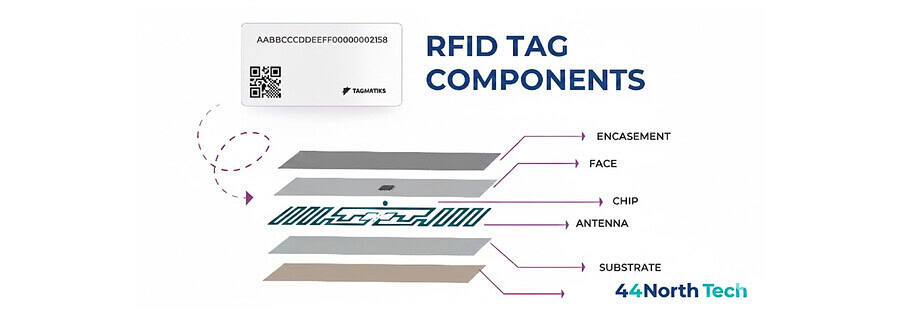
An RFID label typically includes three parts:
- Face material: Printable surface that often includes human-readable data.
- RFID inlay: The chip and antenna embedded inside, responsible for transmitting data.
- Adhesive layer: Allows the label to be affixed to surfaces like boxes, equipment, or documents.
Labels can be encoded with unique identifiers and paired with software systems for automation, audit trails, and real-time visibility.
Evolution of RFID Labels
Early RFID labels were expensive, bulky, and limited in read range. Today, advancements in chip design, antenna engineering, and manufacturing processes have made RFID labels more cost-effective, thinner, and optimized for a wider range of environments. Key developments include:
- Smaller inlay sizes: Enabling RFID integration even on small retail items.
- Higher memory capacities: Allowing storage of detailed product or asset data.
- Improved adhesives: Supporting durability in colder or high-moisture environments.
- Custom form factors: From labels for curved surfaces to tamper-evident designs.
Use Cases Across Industries
- Retail: Automated inventory checks, anti-theft systems, and smart fitting rooms.
- Healthcare: Patient record linking, medical equipment tracking, and lab sample validation.
- Manufacturing: Line-side part identification, work-in-progress tracking, and tool auditing.
- Logistics: Faster check-in/check-out of goods at warehouses and docks.
Additional Technical Considerations
RFID label performance is influenced by several factors including frequency selection, antenna design, and the environment in which the label is deployed. UHF RFID labels are the most common for asset and inventory tracking due to their longer read ranges, while HF and NFC labels are often used for access control and close-range interactions.
Another key consideration is surface interaction. Standard RFID labels perform best on non-metallic surfaces such as cardboard, plastic, or wood. For challenging materials like metal or liquid-filled containers, specialized on-metal or foam-backed RFID labels are used to maintain read reliability.
Printing and Encoding RFID Labels
Modern RFID label printers allow businesses to print visual information and encode RFID data simultaneously. This enables serialization, batch encoding, and integration with ERP or asset management systems. As a result, RFID labels become a bridge between physical assets and digital records.
Conclusion
RFID labels represent one of the most versatile and scalable identification technologies available today. Their evolution has been driven by advances in materials, chip performance, and global standards, making them suitable for everything from low-cost consumables to high-value asset tracking. For organizations seeking improved visibility, automation, and data accuracy, RFID labels form the foundation of modern RFID solutions.